
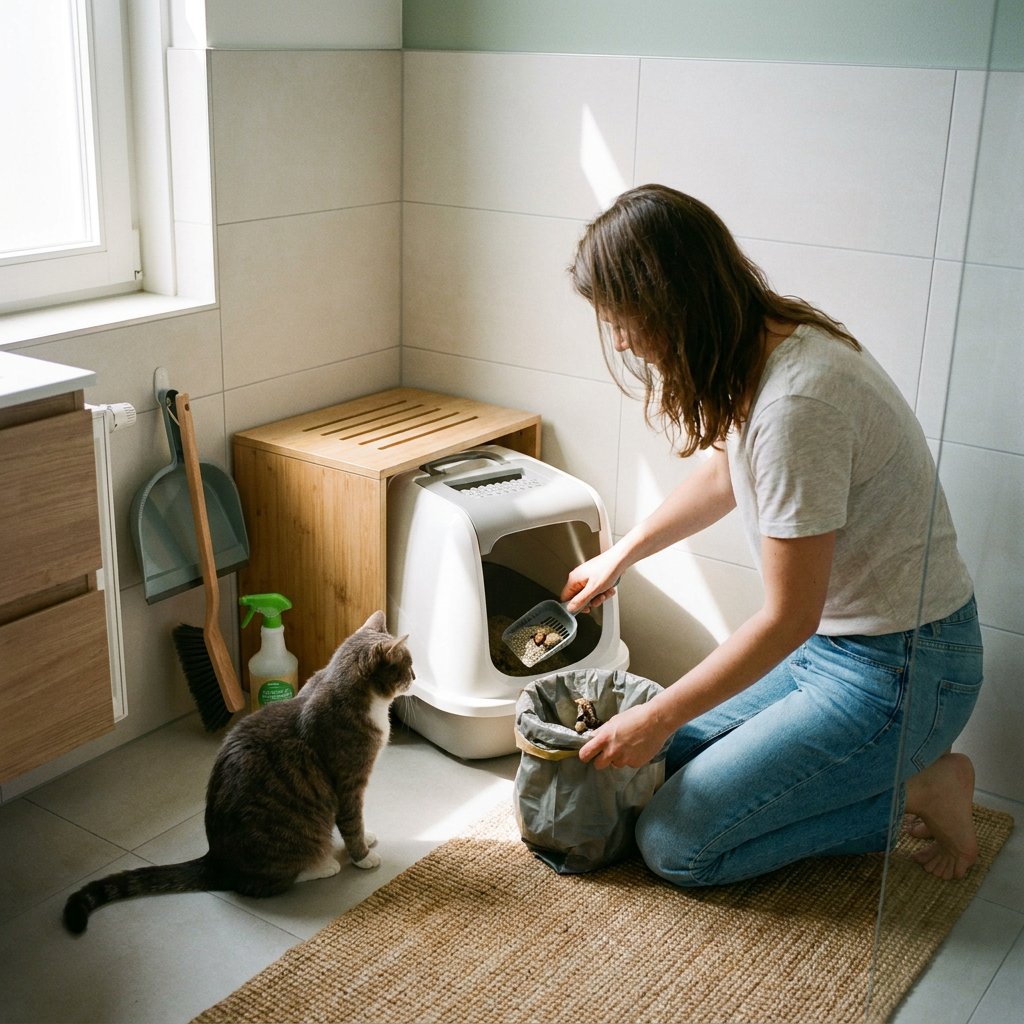
In practice, used cat litter, clumps and cat faeces should almost always be placed in a tightly sealed bag with your general waste. For most households, this is the safest and clearest option.
Important to know: even plant-based or tofu litter usually cannot go in the organic waste bin after use, unless your local waste guide or municipality explicitly allows it. Below, you can see where each type of cat litter waste belongs, why flushing and composting are usually not suitable, and how to dispose of it cleanly and hygienically.
Where each type of cat litter waste belongs
| Type of waste | Where does it belong? | Practical explanation |
|---|---|---|
| Clumps, cat faeces and soiled granules | General waste | Place them together in a tightly sealed bag to minimise odours and leaks. |
| A full change of clay, silica or other mineral or synthetic litter | General waste | These materials do not belong in the organic waste bin or the toilet. |
| Used plant-based, wood, corn or tofu litter | Usually general waste | Even natural litter is often contaminated by urine, faeces and binding agents after use. |
| Unsure about your situation | Check your local waste rules | Waste separation rules can vary by municipality. Always check your local waste guide or your municipality's website. |
Why organic waste is usually not suitable, even for plant-based litter
The organic waste bin may seem logical if you use natural cat litter, but used litter is different from clean organic kitchen or garden waste. Once the granules come into contact with urine, faeces and any odour absorbers or binding agents, they can contaminate the organic waste stream or disrupt the composting and anaerobic digestion process.
Terms such as biodegradable, plant-based or tofu therefore do not automatically mean that used litter can go in the organic waste bin. The practical rule of thumb is simple: choose that option only if your municipality or local waste guide explicitly permits used cat litter in organic waste. In all other cases, use the general waste bin.
Why flushing and home composting are not good ideas
Cat litter should generally not be flushed down the toilet. Granules can clump, expand or settle and cause blockages. It also places an unnecessary burden on the sewer system and wastewater treatment. Home composting is not recommended either: cat faeces may contain toxoplasma and other pathogens, while a typical home compost heap usually does not become hot enough to break them down safely. If the packaging says flushable, do not treat that as permission to flush it without clear local guidance.
How to bag cat litter waste cleanly and safely
- Remove clumps and faeces every day. This keeps the litter box fresher and more comfortable for your cat.
- Replace all the litter when needed. How often this is necessary depends on the type of litter, its absorption capacity and the number of cats in your home.
- Place used waste directly into a sturdy rubbish bag or litter box liner and tie it securely to minimise odours, leaks and contact with contamination.
- Use a good scoop and, if desired, litter box liners inside the box. This helps you work more quickly and neatly.
- Also make sure you clean the litter box regularly, and always wash your hands after disposing of the waste.
Less waste and less scooping: choices that really help
- Do not use more litter than necessary. With the right depth, the litter works effectively without needless waste, even if you choose a litter box without plastic liners.
- Scoop promptly. The sooner you remove clumps and faeces, the longer the remaining litter stays usable.
- Do not completely empty the litter box more often than necessary. Replacing all the litter too soon mainly creates extra waste.
- A litter that clumps well or is lighter to use, such as biodegradable tofu cat litter, can make scooping easier and reduce loose mess.
- Modern self-cleaning automatic litter boxes, such as PETLUX models, reduce the number of times you need to scoop or come into contact with waste. This does not change the correct waste stream: used waste should still be placed in a sealed bag with the general waste.