
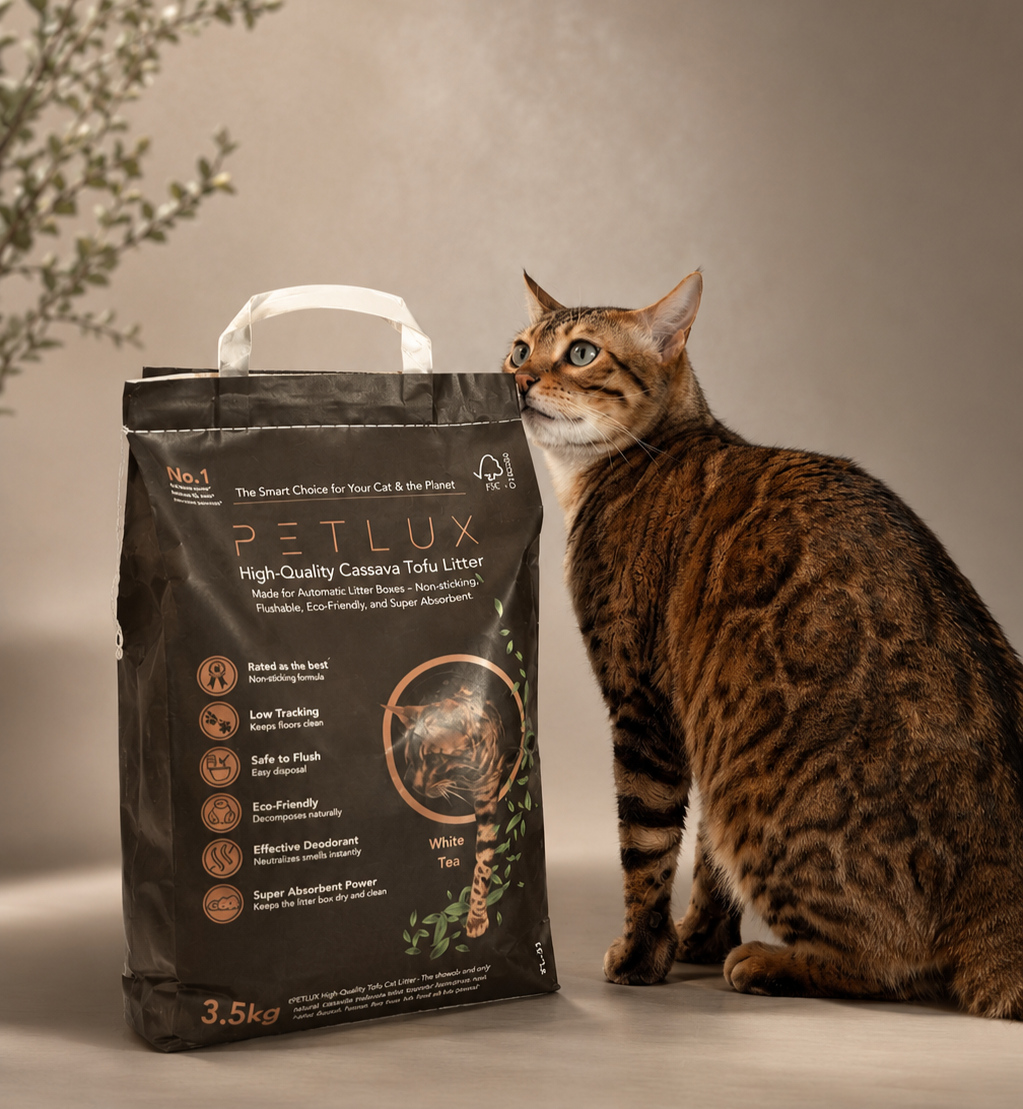
There is no single best dust-free cat litter for every cat. The right choice depends on clumping, absorption, odour control, granule size and the type of litter box. That is why low-dust litter is so popular: less fine dust in your home, fewer paw prints around the litter box and often greater comfort for cats with sensitive airways. Below, you can learn which types tend to produce the least dust, what to consider in different situations and how to keep the litter box genuinely low-dust in practice.
Why low-dust litter is not only more pleasant, but healthier too
In practice, ‘dust-free’ usually means that the litter releases very little dust, rather than literally none at all. Pouring, digging and scooping can always loosen some material. Even so, low-dust litter makes a noticeable difference. There is less fine dust in the air, fewer grey paw prints and the floor around the litter box stays cleaner. This is more comfortable for cats that are sensitive to dust and for you if you want less fine dust in your home. What is more, low dust levels can go hand in hand with good absorption and odour control.
Which types produce the least dust in practice?
These are the most common options:
| Type | Dust levels | Clumping or moisture absorption | Odour and comfort | Disposal |
|---|---|---|---|---|
| Tofu and other plant-based clumping litters | Often very low | Usually forms firm clumps and absorbs well | Soft granules that are often gentle on paws; usually provides good odour control without heavy fragrance | Always follow the instructions on the packaging; used litter generally belongs in general household waste |
| Clay granules | Varies greatly depending on quality | Often clumps well and provides reliable absorption | A familiar feel for many cats; may cause more tracking | Generally disposed of with general household waste |
| Silica | Often low | Absorbs a lot of moisture; does not always clump | Strong moisture control; not every cat likes the texture | Generally disposed of with general household waste |
| Pellet systems | Often produce little loose dust | Works through absorption or disintegration; not always conventionally clumping | Less tracking, but not every cat finds pellets comfortable | Varies by product; check the packaging |
Product quality makes a big difference within every type. Dry granules, minimal breakage and a consistent granule shape often produce less dust. If you would like to compare options, you can also browse PETLUX tofu cat litter.
How to choose what really is best for your cat
When choosing the best dust-free cat litter, do not look only at the packaging. Focus mainly on what works well in your home.
- Make dust levels your top priority: choose a litter that releases as little dust as possible when you pour it, your cat digs in it and you scoop it.
- Consider clumping and absorption: if you scoop every day, firm clumps are often the easiest to remove. With intensive use, what matters most is how quickly moisture is absorbed.
- Choose odour control without heavy fragrance: a strong smell from the bag is not always better. Many cats are more comfortable with mildly scented or unscented litter. If odour is your main concern, read how to solve litter box odour problems.
- Consider comfort for your cat’s paws: fine, soft granules feel different from hard pellets. This can affect whether your cat continues to use the litter box willingly.
- Match the litter to your situation: if you have several cats, a lot of tracking or limited space at home, absorption, tracking and ease of cleaning become even more important.
- Factor in health, sustainability and cost: the healthiest choice is usually low in dust, unscented and suited to your cat’s age and sensitivities. Also consider the weekly cost of use and how easy the litter is to dispose of, especially with plant-based or tofu varieties.
Take extra care with kittens, sensitive cats and automatic litter boxes
Safety comes first with kittens. Young cats may taste or swallow granules, so always check the manufacturer’s age guidance before choosing a clumping litter. For sensitive cats, a soft, unscented and low-dust litter is usually the most comfortable option. If you use an automatic litter box, such as a PETLUX model, always check whether the granule size and clumping performance are compatible with your system. Being low-dust alone is not enough.
Reducing dust at home also starts with proper maintenance
Even good low-dust litter will not perform as well without proper maintenance.
- Fill the litter box deeply enough so that moisture is less likely to reach the bottom and the granules are less likely to crumble.
- For proper maintenance, see how to clean a litter box: tips; scoop it daily and completely replace the litter at the right time.
- Place the litter box in a quiet location and keep the surrounding area tidy so that the box remains inviting for your cat.
- Used cat litter generally belongs in general household waste, not in the toilet. Use litter mats to reduce tracking and keep the area cleaner; a litter box liner also makes changing the litter less messy.
Is there a top 3 or top 10 that works for every cat?
A general top 3 or top 10 can be a useful starting point, but rarely provides the final answer. A kitten, a sensitive indoor cat and a multi-cat household simply do not have the same requirements. When comparing dust-free cat litter, build your shortlist around dust levels, clumping, odour control, comfort and compatibility with your litter box. The strongest options are usually low in dust, highly absorbent, preferably unscented and practical for your daily routine.